
Functional Electrical Stimulation and Exercise in a Patient with Knee Osteoarthritis
Case Study
Introduction
Knee osteoarthritis (KOA) is a degenerative disease causing pain, weakness, and joint dysfunction1-2, with non-surgical management often recommended to delay invasive surgery3. Electrotherapy, including neuromuscular electrical stimulation (NMES) and functional electrical stimulation (FES), is used to counteract muscle decline by producing contractions and mimicking normal movement, leading to improvements in gait and quadriceps strength4-7. While some studies have failed to support NMES alone for pain relief or functional measures8-9, research indicates that combining electrical stimulation with exercise provides a greater stimulus for muscle strengthening and hypertrophy, especially in populations with impaired limbs10-12. This combined approach is supported as an effective management strategy for KOA patients who struggle with exercise, helping to relieve pain, increase quadriceps strength, and improve overall physical function13. Despite inconsistent outcomes when used in isolation, electrotherapy’s ability to directly target quadriceps weakness—and its demonstrated synergy with exercise—warrants its inclusion in KOA management.
The primary objective of this case report is to analyze the effects of electrical stimulation assisted interventions versus a conventional exercise program on muscle strength, perceived function, and pain in a patient with KOA. Additionally, this report aims to compare the effects of unassisted walking and stimulation-assisted walking on walking performance in KOA, and to measure the compliance of electrical stimulation assisted interventions to the prescribed conventional exercise program, assessing the subsequent effects on pain and perceived function.
Case Description
The participant was a 52-year-old (186.7 cm, 112.9 kg) male who was diagnosed with moderate KOA in both knees in August 2022, with the right knee documented as the most symptomatic. The participant was able to walk without an assistive device/orthotic and took Ibuprofen 400 mg three times a day. The patient met all safety requirements, lacked any contraindications of the Cionic Neural Sleeve, and did not have a history of prior knee surgery or hyaluronic acid/cortisone injections into their knees in the previous 12 months.
At baseline, the participant demonstrated a preferred walking speed of 0.98 m/s and required 40.57 s to complete the Five-Times-Sit-to-Stand Test (FTSST), indicating reduced lower-extremity power despite no self-reported difficulties with daily mobility. The participant agreed to participate in the intervention aimed at improving lower-extremity function and walking performance through targeted electrical stimulation. Although representing a single case, the participant provides an example of a typical presentation of KOA in an adult actively managing chronic knee pain while maintaining independent mobility.
Intervention
Intervention description
The participant was fitted with a Cionic Neural Sleeve on their right lower extremity, the limb documented as the most affected/symptomatic. The Cionic Neural Sleeve administered NMES during short arc quad exercises and FES during walking. The system also actively collected kinematic data (joint angles).
Protocol
The participant was instructed to complete a 12-week home exercise program. The home exercise program follows a structure of three days of walking, four days of quadriceps exercise, and a rest day (Table 1). The progression over the 12 weeks focused on increasing both intensity (exercise volume) and duration (aerobic activity).
Table 1 Home exercise program
|
Weeks |
Quadriceps Exercise Volume |
Walking Duration |
|
1-3 |
1 set of 10 repetitions |
10 minutes, increasing to 15 minutes by Week 3 |
|
4-6 |
2 sets of 10 repetitions |
15 minutes, increasing to 20 minutes by Week 6 |
|
7-9 |
3 sets of 10 repetitions |
20 minutes, increasing to 25 minutes by Week 8 |
|
10-12 |
4 sets of 10 repetitions |
30 minutes |
The quadriceps exercise utilized was the short arc quadriceps. The participant was instructed to sit with the leg straight and place a rolled-up towel placed behind the knee. During the exercise, the participant flexed the quadriceps muscle with simultaneous electrical stimulation delivered by the Cionic Neural Sleeve, pushing the knee down onto the towel without lifting the foot. Each contraction consisted of a 3-second hold and a 3-second rest, repeated 10 times per set with timing guided by the supporting device application. For exercise sessions requiring more than one set, the participant was instructed to separate the sets by 30-second rest intervals.
The walking component of the home exercise program required the participant to walk three days per week with FES provided to the quadriceps muscle via the Cionic Neural Sleeve to facilitate appropriate knee extension during the gait cycle. The participant began walking sessions at 10 minutes and followed a progressive schedule to gradually increase the duration up to 30 minutes per walking session by the end of the 12-week study (Table 1).
Outcome measures were administered during study visits conducted on day 1 (T0), week 6 (T1), and week 12 (T2) (Table 2).
Quadriceps strength (N), or maximum voluntary isometric contraction (MVIC), of both limbs was assessed according to a testing protocol.14 The participant was seated with the back erect and legs hanging over the edge of the treatment table, with the knee flexed to 90 degrees. The most affected leg performed the test first. A non-elastic strap was used to secure the handheld dynamometer in place, ensuring it stayed positioned just proximal to the lateral malleolus. The participant was instructed to push against the secured dynamometer, holding the contractions for 5 seconds. Two warm-up trials were performed, each followed by a rest break of 30 seconds. After the warm-up, the participant completed 3 maximal effort repetitions, with 60 seconds of rest between each repetition. The test was repeated on the other leg, with an adequate rest period in between. The average of 3 maximal repetitions was recorded for each leg.
Perceived functional capacity was measured using the Western Ontario/McMaster Universities Osteoarthritis Index physical function (WOMAC-PF).15 The subscale consists of 17 items rated on a 0-4 ordinal scale (0 = None, 4 = Extreme). To score the WOMAC-PF, the item scores are summed, resulting in a total score ranging from 0 to 68. A higher total score indicates worse physical limitations. The minimal clinically important difference (MCID) for improvement of 14.4816 was used as a benchmark.
Pain was measured using the WOMAC-Pain, a 5-item survey that prompts the respondent to reflect the quality of pain in 5 activities during the last 48 hours.15 Scores range from 0 to 20, with high scores indicative of worse pain. The MCID of 8.7416 was used as an indicator of improvement in our study.
Thigh muscle volume (cm3) was measured using a measurement tape for thigh circumference and a prediction model.17 Thigh circumference (cm) was measured from a point 15 cm proximal to the superior pole of the patella. The prediction model was selected for this study for its correlation to magnetic resonance imaging, the gold standard of measuring muscle volume.
Functional ability of the lower limb was measured with the FTSST18. The FTSST required the participant to sit in a chair with their arms crossed over the chest and then to stand up/sit down for five times, as fast as possible. The patient was timed from the initial sitting position to the final standing position.
Quality of life was measured with the Short Form-36 (SF-36)19, a 36-item generic measure of health status that measures self-reported functional health and well-being in the past four weeks. The tool produces both a physical and mental component summary score, with scores ranging from 0 to 100, with 0 representing extreme interference, and 100 representing no interference
All walking assessments were measured with the sleeve donned on the most symptomatic limb across both stimulated and unstimulated conditions. In the unstimulated condition, the patient wore the sleeve to collect kinematic data, but FES was not enabled. In the stimulated condition, the participant received FES assistance while walking. The protocol ensured that unstimulated assessments were always performed first, followed by stimulated assessments, to prevent any carryover or fatigue effects from the stimulation.
Gait speed (m/s) was measured using the 10-meter walk test20. This performance test measured the patient’s speed over the intermediate 6 meters of the 10-meter course, excluding acceleration and deceleration phases. The trials were administered across two variables: speed (preferred and fast) and condition (assisted and unassisted). Two trials were performed for each speed and stimulation condition, resulting in a total of eight trials per visit. 60-second rests were provided between each trial to prevent fatigue. The resulting two trials for each speed and stimulation condition were averaged to determine the final gait speed for that condition. An improvement of 0.12 m/s21 was a measure of clinically significant change.
Walking endurance (m) was measured using the 6MWT using the same walkway utilized for the 10mWT. The participant was instructed to walk as far as possible for 6 minutes, up and down the pathway, and pivoting to turn at the end of each lap22. Timing began when the participant stepped over the start line, and distance traveled was recorded. The test was administered twice, once under stimulated conditions and once under unstimulated conditions, with a 5-minute rest period provided between the two trials.
Adherence to the program was measured using the usage log of the Cionic Neural Sleeve. The data collected from the Cionic Neural Sleeve worn on the most affected limb was recorded to monitor compliance to the program in the number of repetitions and duration of walking.
Table 2
|
Day 1 (T0) |
Weeks 1-6 |
Week 6 (T1) |
Weeks 7-12 |
Week 12 (T2) |
|
|
Quadriceps strength |
X |
X |
X |
||
|
WOMAC-PF |
X |
X |
X |
||
|
FTSST |
X |
X |
X |
||
|
WOMAC-Pain |
X |
X |
X |
||
|
10mWT |
X |
X |
X |
||
|
6MWT |
X |
X |
X |
||
|
Thigh muscle volume |
X |
X |
X |
||
|
SF-36 |
X |
X |
X |
||
|
Home exercise program |
X |
X |
Results
Muscle Strength and Measurement Consistency
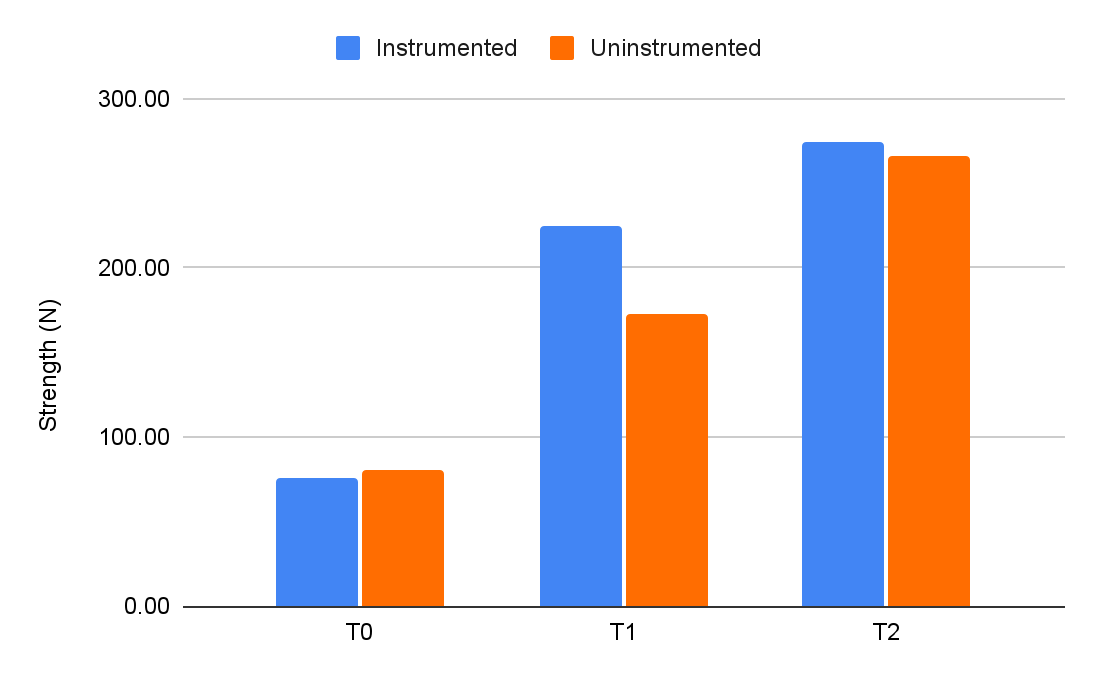
Assessment of quadriceps strength revealed a substantial increase in MVIC over the intervention period, demonstrating improved muscle capacity (Figure 1). At T0, MVIC was similar between the instrumented (75.87 N) and uninstrumented (80.50 N) limbs. By the final visit, MVIC increased significantly for both methods, reaching 274.77 N (instrumented) and 266.03 N (uninstrumented). This represents an approximate 3.5-fold increase - an unusually large gain for a 12-week home-based program - in quadriceps strength. The small difference between the instrumented and uninstrumented strength values across all visits confirmed the high consistency and reliability of the handheld dynamometry protocol used in the study. Thigh muscle volume and circumference did not change significantly and is not reported.
Figure 1 Change in Quadriceps Maximum Isometric Strength Across Study Visits (Instrumented vs. Uninstrumented Assessment)
Functional Endurance and Timed Performance
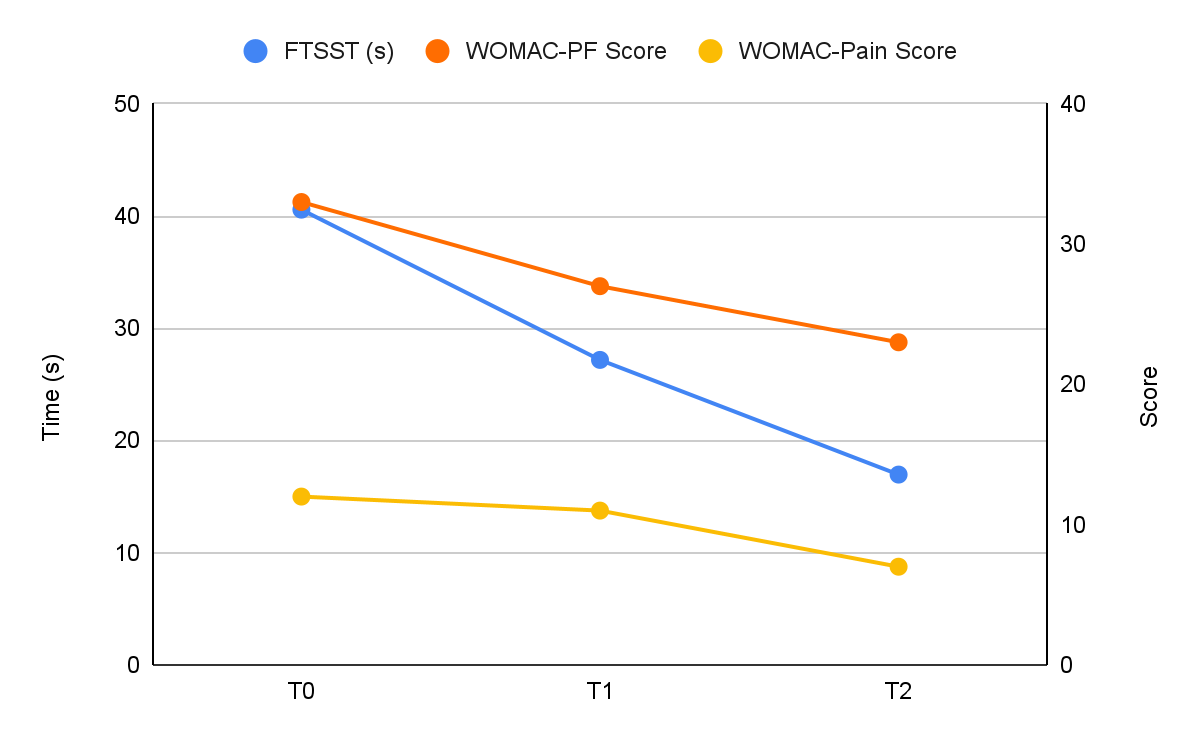
Functional capacity, assessed through the 6MWT and FTSST, showed improvement (Figures 2-3). The time required to complete the FTSST dropped from 40.57 s at T0 to 16.96 s at T2, indicating a reduction in functional limitations and improved muscle power/endurance. Patient-reported outcomes mirrored the objective changes, with the WOMAC-Physical Function score decreasing from 33 at T0 to 23 at T2, and the WOMAC Pain score decreasing from 12 at T0 to 7 at T2. Neither met the established MCID of 14.48 and 8.74.
Quality of life metrics showed mixed results. The physical component summary score demonstrated clinical improvement, rising from 21.88 at T0 to 29.38 at T2. Conversely, the mental component summary score fluctuated, peaking at 35.75 at T1 before settling near baseline at 21.88 at T2.
The participant’s functional endurance improved, with the distance walked increasing from 182.74 m (unassisted) at T0 to 270 m (unassisted) at T2. By T2, the acute effect of the sleeve was minimal, as assisted and unassisted distances were identical, suggesting the gains were not dependent on the immediate assistance of the device.
Figure 2 Change in Functional Endurance (6MWT Distance) Under Assisted and Unassisted Conditions
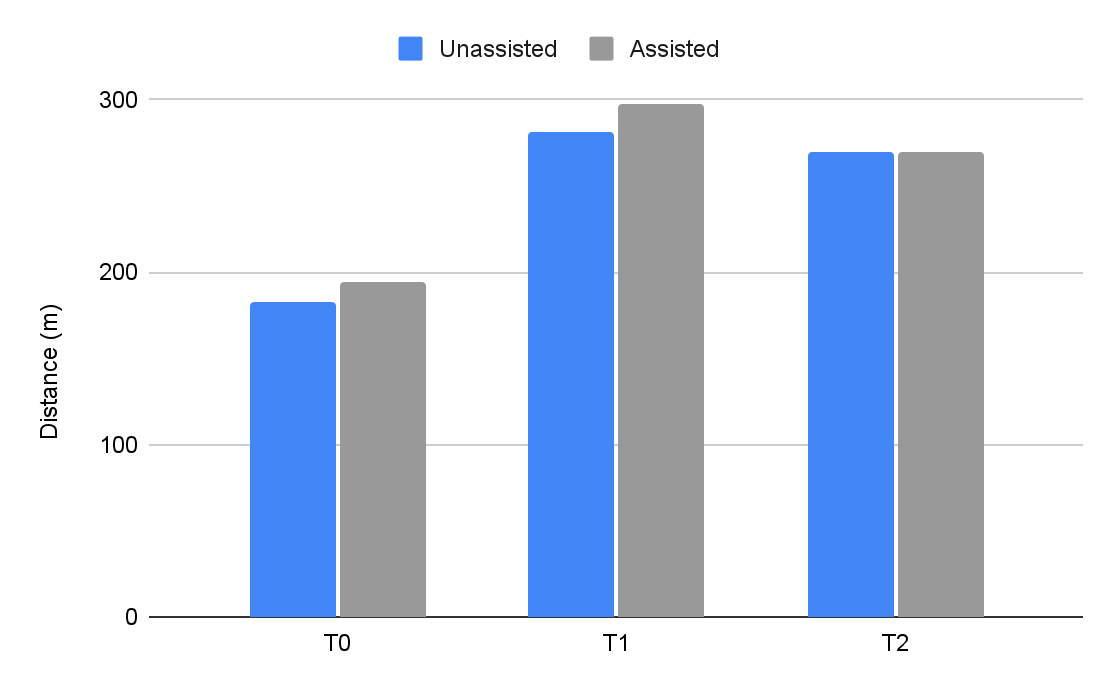
Figure 3 Longitudinal Improvement in Timed Functional Capacity and Patient-Reported Outcomes (WOMAC) from T0 to T2
Gait Performance and Acute Device Effect
Gait speed, measured during the 10mWT, increased across the study, specifically under the fast walking condition (Figure 4). Both preferred and fast walking speeds increased from T0 to T2. Preferred walking speed increased from 0.52 m/s to 0.98 m/s (unassisted), representing a total gain of 0.46 m/s. Fast walking speed increased from 0.70 m/s to 1.23 m/s (unassisted), representing a total gain of 0.53 m/s. Both the preferred and fast walking speed gains significantly exceeded the established benchmark of 0.12 m/s, confirming that the change was clinically meaningful and greater than the minimal detectable change.
At T0, the sleeve provided a slight acute benefit, as assisted speeds were slightly lower than unassisted speeds (Preferred: 0.52 m/s vs. 0.51 m/s; Fast: 0.70 m/s vs. 0.67 m/s). By T1, the system provided an acute increase to both walking conditions (Preferred: 0.88 m/s vs. 0.97 m/s; Fast: 1.23 m/s vs. 1.26 m/s). By T2, the sleeve continued to provide an acute benefit during fast walking (1.23 m/s unassisted vs. 1.27 m/s assisted). However, the device’s effect during preferred walking was slightly negative (0.98 m/s unassisted vs. 0.94 m/s assisted). These patterns suggest that while the participant internalized improvements in baseline gait mechanics, high-demand walking still benefited from external stimulation.
Figure 4 Progression of Acute Gait Speed Across Study Visits by Task (Preferred vs. Fast) and Condition (Assisted vs. Unassisted)

Kinematics Results
Kinematic analysis of stimulated gait across the three study visits demonstrated progressive changes in both the sagittal and frontal planes, indicating a positive alteration in the participant’s gait mechanics following the intervention. The most pronounced changes were observed in the sagittal plane, reflecting improved joint excursion.
Figure 5a-f Kinematics Results
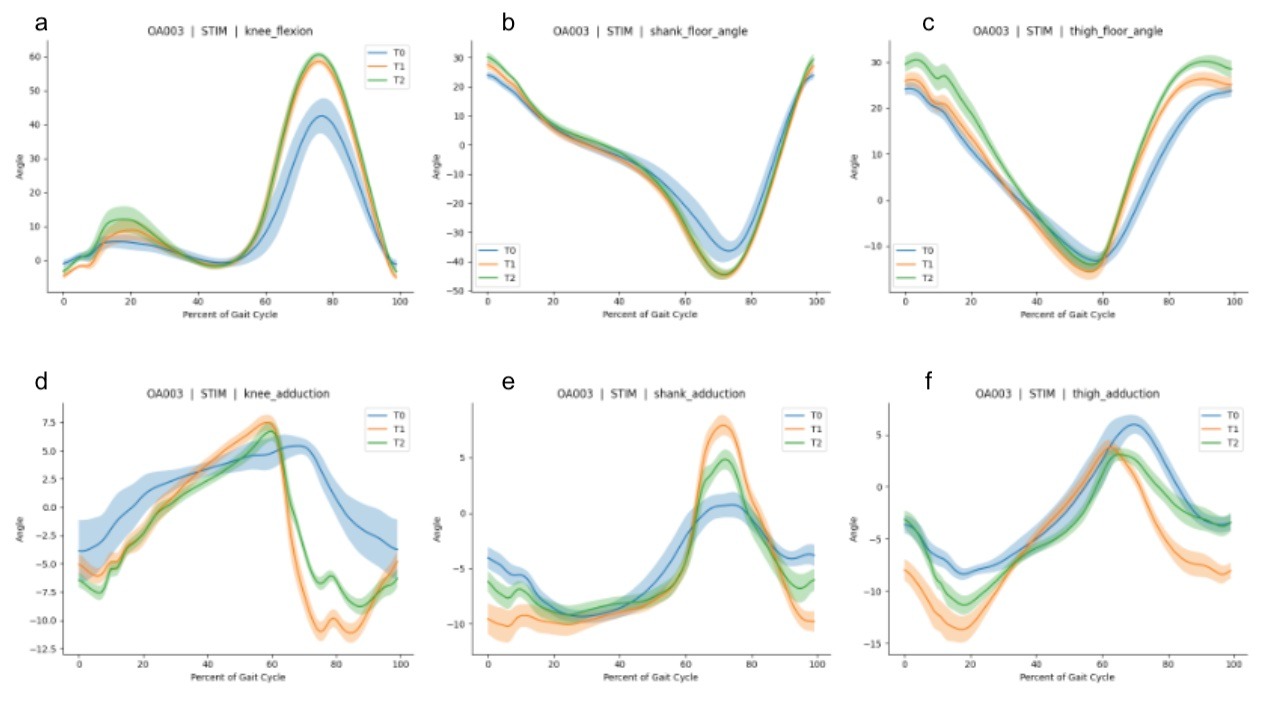
The participant exhibited a clear, rapid increase in the peak knee flexion angle during the swing phase (60%–90% of the gait cycle) (Figure 5a). Peak flexion rose notably from approximately 45 degrees at T0 to 55 degrees at T2. This increase suggests enhanced knee clearance and mobility achieved primarily by the midpoint (T1) of the intervention. A progressive increase in the overall thigh range of motion (ROM) was evident from T0 to T2 (Figure 5b). The final visit (T2) reached the highest peak angles (approximately 30 degrees), demonstrating improved hip mobility and greater functional movement during the gait cycle. The T2 curve (Figure 5c) displayed a more stable and consistent movement profile compared to the initial T0 assessment, which exhibited greater variability and fluctuation, particularly during terminal swing and initial contact.
Changes in the frontal plane were complex, indicating altered medial-lateral control that stabilized over time. T0 showed a high degree of knee adduction in the mid-swing/terminal stance (Figure 5d). In contrast, T1 and T2 displayed profiles shifted toward a more abducted state (more negative angles) throughout the stance phase. The overall adduction/abduction range increased, but the shift toward abduction suggests a direct impact on the knee’s alignment dynamics. While T0 and T1 showed considerable variability, the final visit (T2) demonstrated a reduced total adduction/abduction ROM for both the shank (Figure 5e) and thigh (Figure 5f). This suggests the intervention achieved a more controlled and stable movement profile in the frontal plane by T2, effectively managing lateral excursion.
Protocol Compliance
The intervention protocol consisted of a 12-week progressive home program, detailing a total of 60 prescribed quadriceps exercise sessions (five sessions per week) and 36 prescribed walking sessions (three sessions per week). The patient demonstrated high overall engagement with the protocol.
Over the 12-week period, the patient completed 45 of 60 prescribed exercise sessions, achieving an adherence rate of 75%. The patient exceeded the total walking requirement, completing 45 sessions, or 125% adherence to the scheduled frequency. The combined activity volume resulted in an average completion rate of 3.75 prescribed exercise sessions and 3.75 prescribed walking sessions per week over the course of the study. This overall completion rate of over 70% was considered good adherence for a home-based intervention and supports the conclusion that the protocol was successfully implemented.
Discussion
This case report details the successful implementation of a 12-week home-based FES and exercise protocol utilizing the Cionic Neural Sleeve in a patient with moderate KOA. The intervention resulted in substantial improvements across multiple physiological and functional domains, strongly supporting the value of combining electrotherapy with activity for managing chronic joint disease.
Interpretation of Physiological Gains
The most profound finding was the near 3.5-fold increase in quadriceps MVIC over the 12-week period. This level of strength gain is critical, as quadriceps weakness is a hallmark symptom of KOA and directly contributes to pain and functional decline2. This outcome strongly validates the mechanism proposed in the literature: combining electrical stimulation, which can recruit muscle fibers23 that are difficult to activate voluntarily24, with targeted exercise provides a greater stimulus for muscle strengthening than exercise alone25. The high consistency between instrumented and uninstrumented strength assessments further supports the reliability of the observed gain.
Clinical and Functional Impact
The physiological gains translated directly into meaningful functional improvements. The time required to complete the FTSST decreased from 40.57 s to 16.96 s, a highly clinically relevant reduction that reflects restored functional power and endurance. Kinematic analysis of the stimulated gait revealed enhanced sagittal plane excursion, particularly an increase in peak knee flexion from approximately 45 degrees to 55 degrees. This improvement, which better approximates healthy swing-phase mechanics26, is associated with improved toe clearance and joint stability27. The concurrent increase in thigh ROM suggests improved hip mobility supporting greater step length28.
Gait speed results from the 10-meter walk test demonstrated a progressive increase in unassisted speed. Although some work has demonstrated limited carryover effects from FES training29-30, gait speed gains in this case were not fully internalized. The participant maintained a modest but measurable acute benefit from stimulation during fast walking at T2 (1.23 m/s unassisted vs. 1.27 m/s assisted). This suggests that while substantial strength and functional gains had been consolidated, the central nervous system may still rely on the external cueing provided by the electrical stimulation to achieve maximal gait speed and efficiency.
This pattern of internalization was nuanced. At preferred walking speed, the difference between assisted and unassisted gait was minimal and even slightly negative at T1 (0.98 m/s unassisted vs. 0.94 m/s assisted), suggesting that the participant may have already reached their natural ceiling for comfortable gait speed. In contrast, the more demanding condition of fast walking continued to show a small acute benefit from stimulation, indicating that higher-level gait performance may still depend on the additional temporal and neuromuscular cueing29-30 provided by the device. Together, these findings support the presence of both a therapeutic effect (carryover of gains) and an orthotic effect (acute performance enhancement).
Adherence and Patient-Reported Outcomes
The observed clinical gains were achieved with a 75% adherence rate for the prescribed exercise sessions and a 125% adherence rate for walking frequency. This demonstrates that the home-based protocol with a novel medical device was feasible. However, despite the substantial objective improvements, the WOMAC-PF and WOMAC-Pain scores did not meet their respective MCID benchmarks of 14.48 and 8.74. While the scores did decrease (indicating improvement), the perceived reduction in physical limitations and pain was not substantial enough to be considered a definitive clinical change by the established standard. It may be that pain relief often lags behind functional gain31. This discrepancy between objective functional recovery and subjective reporting was further reflected in the SF-36 quality of life metrics. While the physical component summary score showed a clear positive trend, the variability observed in the mental component summary score suggests that overall mental health and well-being were not consistently improved by the intervention protocol. This highlights that objective strength and mobility gains may not immediately or consistently translate into comprehensive improvements in self-perceived health status across all domains. This discrepancy between large objective gains (strength, FTSST) and moderate subjective gains highlights the complexity of pain perception and the need for personalized rehabilitation goals in KOA.
Limitations
The primary limitation of this study is its single-subject case design, which precludes generalization to the broader KOA population. As this is a single-subject design involving a novel wearable stimulation system, results may not generalize across KOA severities or user proficiency levels. Another limitation of the study is the high adherence to the walking requirement, which suggests that the prescribed duration was too low. Future studies should progressively increase the walking duration. Furthermore, the absence of a control or washout period makes it impossible to definitively separate the effects of the FES from the effects of the conventional exercise and walking alone.
Conclusion
This case demonstrates that a 12-week progressive intervention combining the Cionic Neural Sleeve system with a structured exercise and walking program is highly efficacious in addressing multiple complications associated with KOA. The intervention resulted in a 3.5-fold strength increase and substantial functional gains. While many improvements were internalized, maximal gait speed continued to benefit from FES cueing, indicating sustained orthotic value during high-demand tasks.
References
-
Hsu, H., & Siwiec, R. M. (2022). Knee Osteoarthritis. In StatPearls. StatPearls Publishing.
-
Lespasio, M. J., Piuzzi, N. S., Husni, M. E., Muschler, G. F., Guarino, A., & Mont, M. A. (2017). Knee Osteoarthritis: A Primer. The Permanente Journal, 21, 1–7. https://doi.org/10.7812/TPP/16-183
-
Lim, W. B., & Al-Dadah, O. (2022). Conservative Treatment of Knee Osteoarthritis: A Review of the Literature. World Journal of Orthopedics, 13(3), 212–229. https://doi.org/10.5312/wjo.v13.i3.212
-
Benavent-Caballer, V., Rosado-Calatayud, P., Segura-Ortí, E., Amer-Cuenca, J. J., & Lisón, J. F. (2014). Effects Of Three Different Low-Intensity Exercise Interventions on Physical Performance, Muscle CSA and Activities of Daily Living: A Randomized Controlled Trial. Experimental Gerontology, 58, 159–165. https://doi.org/10.1016/j.exger.2014.08.004
-
Kern, H., Barberi, L., Löfler, S., Sbardella, S., Burggraf, S., Fruhmann, H., Carraro, U., Mosole, S., Sarabon, N., Vogelauer, M., Mayr, W., Krenn, M., Cvecka, J., Romanello, V., Pietrangelo, L., Protasi, F., Sandri, M., Zampieri, S., & Musaro, A. (2014). Electrical Stimulation Counteracts Muscle Decline in Seniors. Frontiers in Aging Neuroscience, 6(189), 1-11. https://doi.org/10.3389/fnagi.2014.00189
-
de Oliveira Melo, M., Aragão, F. A., & Vaz, M. A. (2013). Neuromuscular Electrical Stimulation for Muscle Strengthening in Elderly with Knee Osteoarthritis – A Systematic Review. Complementary Therapies in Clinical Practice, 19(1), 27–31. https://doi.org/10.1016/j.ctcp.2012.09.002
-
Moran, U., Gottlieb, U., Gam, A., & Springer, S. (2019). Functional electrical stimulation following anterior cruciate ligament reconstruction: a randomized controlled pilot study. Journal of neuroengineering and rehabilitation, 16(89), 1-9. https://doi.org/10.1186/s12984-019-0566-0
-
Zeng, C., Li, H., Yang, T., Deng, Z. H, Yang, Y., Zhang, Y., & Lei, G. H. (2015). Electrical Stimulation for Pain Relief in Knee Osteoarthritis: Systematic Review and Network Meta-Analysis. Osteoarthritis and Cartilage, 23(2), 189–202. https://doi.org/10.1016/j.joca.2014.11.014
-
Giggins, O., Fullen, B., & Coughlan, G. (2012). Neuromuscular Electrical Stimulation in the Treatment of Knee Osteoarthritis: A Systematic Review and Meta-Analysis. Clinical Rehabilitation, 26(10), 867–881. https://doi.org/10.1177/0269215511431902
-
Prenton, S., Hollands, K. L., Kenney, L. P. J., & Onmanee, P. (2018). Functional electrical stimulation and ankle foot orthoses provide equivalent therapeutic effects on foot drop: A meta-analysis providing direction for future research. Journal of Rehabilitation Medicine, 50(2), 129–139. https://doi.org/10.2340/16501977-2289
-
Gervasoni, E., Parelli, R., Uszynski, M., Crippa, A., Marzegan, A., Montesano, A., & Cattaneo, D. (2017). Effects of Functional Electrical Stimulation on Reducing Falls and Improving Gait Parameters in Multiple Sclerosis and Stroke. PM&R, 9(4), 339-347.e1. https://doi.org/10.1016/j.pmrj.2016.10.019
-
Shin, H. E., Kim, M., Lee, D., Jang, J. Y., Soh, Y., Yun, D. H., Kim, S., Yang, J., Kim, M. K., Lee, H., & Won, C. W. (2022). Therapeutic Effects of Functional Electrical Stimulation on Physical Performance and Muscle Strength in Post-stroke Older Adults: A Review. Annals of Geriatric Medicine and Research, 26(1), 16–24. https://doi.org/10.4235/agmr.22.0006
-
Durmuş, D., Alaylı, G., & Cantürk, F. (2007). Effects of Quadriceps Electrical Stimulation Program on Clinical Parameters in the Patients with Knee Osteoarthritis. Clinical Rheumatology, 26(5), 674–678. https://doi.org/10.1007/s10067-006-0358-3
-
Tan, A. E. L., Grisbrook, T. L., Minaee, N., & Williams, S. A. (2018). Predicting 1 Repetition Maximum Using Handheld Dynamometry. PM&R, 10(9), 934–941. https://doi.org/10.1016/j.pmrj.2018.02.017
-
Bellamy, N., Buchanan, W. W., Goldsmith, C. H., Campbell, J., & Stitt, L. W. (1988). Validation Study of WOMAC: A Health Status Instrument for Measuring Clinically Important Patient Relevant Outcomes to Antirheumatic Drug Therapy in Patients with Osteoarthritis of the Hip or Knee. The Journal of Rheumatology, 15(12), 1833–1840.
-
Angst, F., Benz, T., Lehmann, S., Aeschlimann, A., & Angst, J. (2018). Multidimensional Minimal Clinically Important Differences in Knee Osteoarthritis After Comprehensive Rehabilitation: A Prospective Evaluation from the Bad Zurzach Osteoarthritis Study. RMD Open, 4(2), 1-9. https://doi.org/10.1136/rmdopen-2018-000685
-
Chen, B.-B., Shih, T. T. F., Hsu, C.-Y., Yu, C.-W., Wei, S.-Y., Chen, C.-Y., Wu, C.-H., & Chen, C.-Y. (2011). Thigh Muscle Volume Predicted by Anthropometric Measurements and Correlated with Physical Function in the Older Adults. The Journal of Nutrition, Health & Aging, 15(6), 433–438. https://doi.org/10.1007/s12603-010-0281-9
-
Muñoz-Bermejo, L., Adsuar, J. C., Mendoza-Muñoz, M., Barrios-Fernández, S., Garcia-Gordillo, M. A., Pérez-Gómez, J., & Carlos-Vivas, J. (2021). Test-Retest Reliability of Five Times Sit to Stand Test (FTSST) in Adults: A Systematic Review and Meta-Analysis. Biology, 10(6), 510. https://doi.org/10.3390/biology10060510
-
Ware, J. E. (2000). SF-36 Health Survey Update. Spine, 25(24), 3130–3139. https://doi.org/10.1097/00007632-200012150-00008
-
Macfarlane, P. A., & Looney, M. A. (2008). Walkway Length Determination for Steady State Walking in Young and Older Adults. Research Quarterly for Exercise and Sport, 79(2), 261–267. https://doi.org/10.1080/02701367.2008.10599489
-
Börjesson, M., Weidenhielm, L., Elfving, B., & Olsson, E. (2007). Tests of Walking Ability at Different Speeds in Patients with Knee Osteoarthritis. Physiotherapy Research International: The Journal for Researchers and Clinicians in Physical Therapy, 12(2), 115–121. https://doi.org/10.1002/pri.360
-
ATS Committee on Proficiency Standards for Clinical Pulmonary Function Laboratories. (2002). ATS Statement: Guidelines for the Six-Minute Walk Test. American Journal of Respiratory and Critical Care Medicine, 166(1), 111–117. https://doi.org/10.1164/ajrccm.166.1.at1102
-
Gregory, C. M., & Bickel, C. S. (2005). Recruitment Patterns in Human Skeletal Muscle During Electrical Stimulation. Physical Therapy, 85(4), 358–364. https://doi.org/10.1093/ptj/85.4.358
-
Fink, B., Egl, M., Singer, J., Fuerst, M., Bubenheim, M., & Neuen-Jacob, E. (2007). Morphologic changes in the vastus medialis muscle in patients with osteoarthritis of the knee. Arthritis and rheumatism, 56(11), 3626–3633. https://doi.org/10.1002/art.22960
-
Narvaez, G., Apaflo, J., Wagler, A., McAinch, A., & Bajpeyi, S. (2025). The additive effect of neuromuscular electrical stimulation and resistance training on muscle mass and strength. European journal of applied physiology, 125(6), 1687–1700. https://doi.org/10.1007/s00421-024-05700-2
-
Patathong, T., Klaewkasikum, K., Angsnuntsukh, C., Woratanarat, T., Kijkunasathian, C., Sanguantrakul, J., & Woratanarat, P. (2023). The knee kinematic patterns and associated factors in healthy Thai adults. BMC Musculoskeletal Disorders, 24(1), 940. https://doi.org/10.1186/s12891-023-07081-7
-
Zhang, L., Ma, R., Li, H., Wan, X., Xu, P., Zhu, A., & Wei, P. (2024). Comparison of knee biomechanical characteristics during gait between patients with knee osteoarthritis and healthy individuals. Heliyon, 10(17), e36931. https://doi.org/10.1016/j.heliyon.2024.e36931
-
Jiroumaru, T., Wachi, M., Hyodo, Y., Oka, Y., & Fujikawa, T. (2025). Changes in Iliopsoas Muscle Activity and Hip/Pelvic Kinematics With Variations in Step Length and Cadence at a Fixed Walking Speed. Cureus, 17(5), e84737. https://doi.org/10.7759/cureus.84737
-
Miller, L., McFadyen, A., Lord, A. C., Hunter, R., Paul, L., Rafferty, D., Bowers, R., & Mattison, P. (2017). Functional Electrical Stimulation for Foot Drop in Multiple Sclerosis: A Systematic Review and Meta-Analysis of the Effect on Gait Speed. Archives of Physical Medicine and Rehabilitation, 98(7), 1435–1452. https://doi.org/10.1016/j.apmr.2016.12.007
-
Stein, R. B., Everaert, D. G., Thompson, A. K., Chong, S. L., Whittaker, M., Robertson, J., & Kuether, G. (2010). Long-term therapeutic and orthotic effects of a foot drop stimulator on walking performance in progressive and nonprogressive neurological disorders. Neurorehabilitation and neural repair, 24(2), 152–167. https://doi.org/10.1177/1545968309347681
-
Andreopoulou, G., Busselli, G., Street, T., Bulley, C., Safari, R., van der Linden, M. L., & Burridge, J. (2024). Is functional electrical stimulation effective in improving walking in adults with lower limb impairment due to an upper motor neuron lesion? An umbrella review. Artificial organs, 48(3), 210–231. https://doi.org/10.1111/aor.14563
-
Bleichner, N., Heitzmann, D. W. W., Raynaud, J., Stähle, A., Weichold, C., Alimusaj, M., Putz, C., Nees, F., Flor, H., & Wolf, S. I. (2025). Effects of functional electrical stimulation on cognition rate and gait in neurological patients during single- and dual-task walking. Scientific reports, 15(1), 13557. https://doi.org/10.1038/s41598-025-98755-w
-
Sturgeon, J. A., Langford, D., Tauben, D., & Sullivan, M. (2021). Pain Intensity as a Lagging Indicator of Patient Improvement: Longitudinal Relationships With Sleep, Psychiatric Distress, and Function in Multidisciplinary Care. The Journal of Pain, 22(3), 313–321. https://doi.org/10.1016/j.jpain.2020.10.001